Monday, 4 April 2016

The Rescued Babbler -Champa Jaiprakash


The young babbler in our garden
Our house is in a new locality in the outskirts of the bustling city of Coimbatore. The urban malice of construction and expansion is yet to catch up here and hence the locality is home to a wide variety of flora and fauna. There are trees lining the new roads with a variety of bird species making them their home. Peacocks, the earlier inhabitants of this land before we took over and made it into a “locality”, still share their home with us, the humans. The locality is home to a few animals as well with snakes, scorpions, chameleons and frogs being commonly sighted in the bushes and burrows of the empty sites. A plethora of insects complete the fauna population here.

It was a hot summer evening earlier this week when we found a bird sitting on the steps of our portico. We knew it was in trouble when it didn’t fly even when we walked towards it. Upon closer observation we found it be very weak. We had no clue how to treat the bird and all we did was to keep a bowl of water near the tired bird. It was a situation that called for professional help and we knew just the man to ask for help, my Naturalist brother Manu. We took a photo of the bird and sent it to Manu for identification and the next course of action to heal it.

It’s a young Babbler, not totally independent of its mother’s care said Manu and it must be suffering from a sun stroke! Babblers are “non-vegetarian” birds and eat insects only, they don’t eat grains. Babblers, or any bird for that matter, try and avoid human contact and hence we didn’t want to scare it by touching or moving it. We kept a watch from a safe distance hoping that it would recover and fly away. But, the Babbler stayed on making itself comfortable in one of my grandson’s shoes! We got busy with our household chores but the children peered in occasionally to check on the ailing bird and to keep an eye on the naughty cat in the house. We replenished the water in the bowl on last time at night and went to sleep.

The next morning we woke up to the squealing of many birds. We went out and saw five Babblers along with our ailing babbler, which was not in the shoe anymore but was with two other bigger babblers at the edge of the compound. The bigger ones were feeding grasshoppers to our Babbler. Three other Babblers were perched on the compound wall and looked fiercely at us. We presumed that they were on security duty!

The feeding went for a considerable time. Whenever we came out to look, the Babblers on security duty were alert and kept the fierce gaze on us! What team work of these noisy birds?  Dr. Salim Ali rightly called them the ‘Seven sisters’.

A file picture of a babbler.
Finally, after an hour of replenishment and coaxing our young Babbler spread its wings and flapped it a few times and tried to take off. All it could manage was to reach the lower branch of a potted plant in our compound! It had still not recovered completely. The feeding resumed in the right earnest and went on for another two hours! Our Babbler stayed on the branch. The two bigger Babblers tirelessly fed our young fellow and the Babblers on the security duty did their job with utmost concentration, their fierce gaze never wavered! We were awestruck by the social behavior of these birds.

By evening, our young Babbler looked visibly healthy. It flapped its wings again and this time it was able to fly. In the next few seconds the Babblers on feeding and security duty also flew away.

Nature’s handiwork is everywhere and the social behaviour of the Babblers is a great example of it. All we need is an eye for observing it.

We did learn a lesson from this Babbler incident, we now place water in earthen pots around the house, so that birds can quench their thirsts in these scorching summer months. 

Wednesday, 23 March 2016

Taking Down’s syndrome with a stride


Down's syndrome is a genetic disorder caused by the presence of an extra copy of chromosome 21 in a baby's cells. In the vast majority of cases, this isn't inherited and is simply the result of a one-off genetic mistake in the sperm or egg. The disorder is unique to human species

There is a small chance of having a child with Down's syndrome with every pregnancy, but the risk increases with the age of the mother. For example, a woman who is 20 has about a 1 in 1,500 chance of having a baby with the condition, while a woman who is 40 has a 1 in 100 chance.

There is no evidence that anything done before or during pregnancy increases or decreases the risk of having a child with Down's syndrome. Although there is no "cure" for Down's syndrome, there are many ways to help children Down ’s syndrome develop into healthy and fulfilled individuals who are able to achieve the level of independence right for them.

 This includes:
  • ·  access to good healthcare, including a range of different specialists
  • ·  early intervention programmes to provide support for children and parents
  • ·  good parenting skills and an ordinary / normal family life
  • ·  education and support groups to provide information and help for parents, friends        and families

Improved education and support has led to more opportunities for people with Down's syndrome. These include being able to leave home, form new relationships, gain employment and lead largely independent lives.
One in every 691 babies in the United States is born with Down syndrome, making Down syndrome the most common genetic condition. Approximately 400,000 Americans have Down syndrome and about 6,000 babies with Down syndrome are born in the United States each year. 
March 21st is celebrated as the Down's Syndrome Day
Life expectancy for people with Down syndrome has increased dramatically in recent decades – from 25 in 1983 to 60 today.  People with Down syndrome attend school, work, participate in decisions that affect them, have meaningful relationships, vote and contribute to society in many wonderful ways.  All people with Down syndrome experience cognitive delays, but the effect is usually mild to moderate and is not indicative of the many strengths and talents that each individual possesses. Quality educational programs, a stimulating home environment, good health care and positive support from family, friends and the community enable people with Down syndrome to lead fulfilling and productive lives.

However, it is important to remember each child is different and it is not possible to predict how individuals will develop. However social acceptance and finding a trustworthy peer group is the foremost requirement for the successful upbringing of them. 

Illustration of a diagnostic case history

                                                                                                 -by Champa Jaiprakash.

A Baby born with Down's Syndrome
Sanjay, an infant of just fifteen days was taken to the paediatrician for a general check-up. The doctor referred him to a paediatric Cardiologist, as he heard murmuring sounds along with the heartbeat.
Shrihari and Sangeetha , parents of Sanjay, sat in Dr.Mohanda’s Cardiac clinic, silently waiting for their turn, with worried faces. When Sanjay’s name was called out, they went in to the Doctor’s cabin and wished him. The nurse took the child and removed his wraps, weighed him, measured his height, circumference of the head, and placed him ready on the table for further examination. 

Meanwhile the Doctor read the reference letter handed over by Sangeetha and as he came near Sanjay, he murmered, “Oh, Down’s syndrome”. He checked the baby for more than ten minutes and in between, asked few questions to Sangeetha.

 As the doctor sat in his chair, Sangeetha eagerly asked with moist eyes, “Doctor, how is the baby’s heart? Does he require surgery or can he be cured with medicines? Will he be alright?” her anxiety poured out with a shower of questions. The doctor patiently observed her face. After a few seconds, he said, “As you believe, there is nothing to worry about his heart.” Hearing his words, there was a bit of a relief among the parents. “There is an extra hole in his heart”, he continued “but in ninety per cent of such cases the hole closes naturally as the child grows. Suppose if it does not by the age of five or six we may have to consider it for surgery. Now there is nothing to worry!”

The doctor gave a break and furthered sharing his diagnosis. “What you need to be more concerned, is about his respiratory system. He tends to get cold frequently; if it is not treated properly it may turn into pneumonia. So never neglect his common cold.” The cautious doctor was sure that every one’s mind was diverted, he added, “One important thing is – he is a Down’s syndrome baby- has anybody mentioned about this to you before?” He looked at Sangeetha and asked. She nodded her head with a no. His gaze turned towards Shrihari and continued “You know something sir, Parents of Down’s babies are very lucky it seems”. He was preparing their mind to receive a bigger blow! Removing the pen stand, he asked Sangeetha to put the baby on his table. “Let me explain about Down’s syndrome, when a baby is created twenty three pairs of chromosomes are required. Twenty three chromosomes from you and another set of twenty three chromosomes from his father, this carries genetic qualities of both your families. For some unknown reasons some times, may be one in many thousands, an extra chromosome gets attached on the twenty first chromosome, just like extra toppings on the Ice-cream scoop. This extra chromosome is dominating and stronger than all the remaining twenty two pairs. This will hamper the physical and the mental development of the baby.” He was being very careful in revealing a serious information to the parents.  He knew how difficult it was for the parents to accept the fact – ‘disability a problem for the life time’.  He continued, imagining their emotional state, “As soon as I saw the baby I realised him to be a  Down’s syndrome baby but you may confirm it with a genetic test called karyotype test.
John Longdon Down 1886

Dr.Mohandas began explaining the features of the downs child. “You can observe Sanjay’s eyes are slanting, there is a line of fold near the eyes and they are proportionately smaller to the face than of other babies. The ear lobes are smaller” he held both the ears in his hands. “Check his hands, there is only one single line in the centre of the hand, the fingers are shorter than the palm.” Handling the nimble limbs of the child he said that they are not firm and can bend the fingers backwards just as we can bend forward, and his. His tongue being thick he can’t close his mouth fully. This is the reason why these children get frequent infections in their respiratory system, his speech may also be effected. Their nose ridge is not sturdy.  Just observe his feet, its shape is not like other children, there is a wide space between the big toe and the other toes. He also has excess skin on the back of his neck.

 The doctor re emphasised the common physical traits of Down syndrome such as low muscle tone, small stature, an upward slant to the eyes, and a single deep crease across the center of the palm. Although each person with Down syndrome is a unique individual and may possess the same characteristics to different degrees, or not at all they are all different.

You know something, if we collect all the Down’s children from across the world, they resemble each other and we feel that they all are siblings. All of them look so cute. A special quality that we observe in them is that they mingle with every one very soon and they are very happy with any one. They love music and dance, they can learn any simple task and do it with at most care and perseverance.

 It is a bit difficult for them to get formal education and go for higher studies. Their immune system is not very strong hence they may fall sick frequently. Sangeetha and Shrihari   felt like they had travelled through a new world after listening, to the information that the Doctor had poured out was spinning in their minds. He had very tactfully provided all the tough information with ease, clearly and smoothly. Sangeetha had a woofing whirl wind inside her. Cute Sanjay was sleeping while all this turmoil was going on around him.

This is the condition of a child with Down’s syndrome. They need constant follow up of medical treatment for heart, respiratory system and general health.  For their other physical and mental development they need physiotherapy, speech therapy and special education. Though their life span is a little lesser than a normal person they can bloom to their fullest with good training and ample exposure to nature.

Monday, 21 March 2016

Himachal government mulls declaring monkeys as vermin HT Correspondent, Hindustan Times, Shimla..


In a bid to rein in the wild animal menace, the government would set up enclosed habitats for marauding monkeys — a major cause of concern for the agrarian community across the state.
Forest minister Thakur Singh Bharmauri in reply to a question of Kullu legislator Maheshwar Singh said that the government was working on checking man-animal conflict. He said the forest department has already conducted a survey to assess the population of monkeys.
The government would declare monkeys as vermin after assessing the survey. He said that the enclosed habitants for the monkeys would be set up in nine different locations where sterilisation centres were already functional.
Former chief minister Prem Kumar Dhumal in a supplementary wanted to know whether the government made any correspondence with the Central government about declaring the monkeys as vermin. Dhumal demanded the forest minister to table the copy of the correspondence in the House.
Dhumal said in his assembly segment the monkeys had made it difficult for children to go to schools while the women folks are hesitant to work in the fields. He urged the forest department to at least declare the monkeys as vermin in Shimla and Hamirpur towns where the menace was alarming.
and the news continues!!!!

THE STATE government has, in a proposal to the Ministry of Environment and Forests (MoEF), sought the Centre's intervention to declare monkeys as vermin so as to allow their selective killing in hotspot areas.

At least seven tehsils in Kangra district, five each in Una, Bilaspus and Sirmaur, are among 39 tehsils in the state's 10 of 12 districts that have been identified as monkey hotspots - where the concentration of the simians is very high.

Barring Mandi district, where only one tehsil i.e. Sundernagar has been identified as monkey hotspot, Shimla and Chamba have four each and Kullu three, which also include popular tourists destination of Manali besides Sainj and Kullu.
The state's communication was sent on March 14, 2016 after the issue was raised in the state assembly. While the government in the proposal detailed the steps, including sterilization of monkeys since 2007, taken so far, it also tried to convince the Centre that every year agriculture crops worth Rs 184.28 crore were destroyed by the monkeys. They also destroyed horticulture crop worth Rs 150.10 crore as per the 2014 studies.

As per the data complied by the wildlife department, there has been a rise in monkey attacks on human beings - from 18 in 2007 to 402 in 2011.
The highest number of monkey attacks - 513 - was reported in 2013-2014.
The proposal also adds: "Since the government has exhausted all possible deterrents, yet the problem is still alarming, which calls for considering the request to declare Rhesus macaque ( Monkeys) as vermins under Section 62 of the Wildlife (Protection) Act, 1972, initially for a period of one year and only in the selected hotspot tehsils."

Earlier in May 2015, the MoEF had declined Himachal Pradesh government request to declare monkeys vermin till a proper census was conducted to identify hotspots. The government informed the MoEF that a survey of the monkey population has been done in July 2015.


Friday, 18 March 2016

An alarming news in Deccan Herald !

Precious forest land in Tumakuru de-reserved, miners to benefit

Ambarish B, March 18, 2016, Bengaluru, DHNS
323 ha declared revenue land, based on order passed by top official in 2015
DH File Photo for representation.

 At a time when efforts to retain the forest land in Karnataka are becoming strenuous, the Forest Department has lost yet another vast area of its land in Chikkanayakanahalli, Tumakuru district. 
As many as 323.88 hectares of reserved forest land as been declared revenue land through an order passed by the then Additional Chief Secretary of Department of Forests, Ecology and Environment, M Madan Gopal, on December 21, 2015. 

Gopal passed the order a few days before his retirement, declaring as invalid the 1994 government notification that bracketed the land as forest land. The order invariably regularised at least nine major mining companies operating in this area. 

The notification under section 4 of the Karnataka Forest Act was issued on August 4, 1994, proposing to declare land in Janeru (Jaaneharu village) of Chikkanayakanahalli taluk reserved forest. The notification declaring the extent of 323.88 hectares in survey numbers 41, 42, 43 as reserved forest was published in the gazette on October 31, 1996. 

In a subsequent development, the Central Empowered Committee (CEC) formed by the Supreme Court stated in its February 2012 report that there were apparent mistakes in the 1996 notification. The Supreme Court then gave an interim order, directing the government to issue the corrigendum to correct the “typographical errors”, as submitted by the department. Subsequently, a corrigendum was issued in September 2014, which included 37 new survey numbers with an area of 1,545.04 hectares as reserved forest. 

Aggrieved by the corrigendum, the mining companies approached the High Court which passed orders in September and October 2015, directing the Forest Department to hear the representation of the miners on the objections to the corrigendum. 

The companies moved the appellate authority (Additional Chief Secretary) and argued that the 1996 notification itself was invalid since the government had passed an order way back in 1991 with instructions that the land in survey numbers 41, 42, 43 was in C&D category, meaning it was under the Revenue Department. They also contended that the Forest Settlement Officer had submitted a report in 2006, stating that it was not forest land. 

Based on this submission, Gopal stated, “The corrigendum dated September 2014 is set aside. Similarly, (the) notification issued earlier dated August 1994 is declared invalid in view of the report of the Forest Settlement Officer and earlier Government Orders issued from (the) revenue department from time to time.” 

A senior official in the Forest Department said on the condition of anonymity, “The Government Orders quoted by the advocates representing the companies were not speaking orders or notifications. Unfortunately, the Forest Department did not engage any advocates to argue its case. The classification of C&D land was done by the Agriculture Department. The land in question was district forest earlier and there was no order de-reserving this land.” 

NGO urges govt to revoke order

Samaj Parivartana Samudaya, the NGO which has petitioned the Supreme Court in the illegal mining case, said it would appeal the order that de-reserved the forest land. 

“The companies had only challenged the corrigendum before the High Court. The corrigendum was issued on the Supreme Court’s direction. Strangely, the companies challenged the 1996 notification itself. The order will result in a huge loss to the exchequer and of the forest land cover. We will first appeal to the government to review the order. We will move the court if no action is taken,” said the NGO’s board member, Deepak C N.

Monday, 28 December 2015

ಭೋಗಪ್ರಳಯ! ಇದು ಸರಿದು ನಿಲ್ಲುವ ಸಮಯ :- ನಾಗೇಶ ಹೆಗಡೆ || Sun, 12/27/2015 - 01:00 Prajavani; Muktachanda


ವರ್ಷವೊಂದರ ಕೊನೆಯ ಭಾಗ ಎಂದರೆ ಅದು ಮೋಜು – ಮನರಂಜನೆಯ ಮುನ್ನುಡಿ ಎನ್ನುವುದು ಮಾರುಕಟ್ಟೆ ಕೇಂದ್ರಿತ ಆಧುನಿಕ ಜಗತ್ತಿನ ಪರಿಭಾಷೆ. ಸುಖವನ್ನು ಸೂರೆಗೊಳ್ಳುವ ಧಾವಂತದಲ್ಲಿ ಬೇಕಾದ್ದು ಬೇಡವಾದ್ದು ಎಲ್ಲವನ್ನೂ ಮನೆ – ಮನಸ್ಸಿನಲ್ಲಿ ತುಂಬಿಕೊಳ್ಳುತ್ತೇವೆ. ಈ ಹೇರಿಕೆ ನಮಗೆ ತಿಳಿಯದಂತೆಯೇ ಭೂಮಿಯ ಆರೋಗ್ಯದ ಮೇಲೆ ವ್ಯತಿರಿಕ್ತ ಪರಿಣಾಮ ಬೀರುತ್ತದೆ. ಅಂದಹಾಗೆ, ನಮ್ಮ ಸುತ್ತಲಿನ ಸಮಾಜ ಹಾಗೂ ಪರಿಸರದ ಹಿತಕ್ಕೆ ಧಕ್ಕೆಯಾಗದಂತೆ ಹೊಸ ವರ್ಷವನ್ನು ಬರಮಾಡಿಕೊಳ್ಳುವುದು ಹೇಗೆ? ಹೊಸ ವರ್ಷದ ನಮ್ಮ ನಡವಳಿಕೆ, ಸಂಕಲ್ಪಗಳು ಹೇಗಿರಬೇಕು? ಇಲ್ಲಿನ ಬರಹ ರೂಪದ ‘ಅಕ್ಷರಗಳ ಉರುಳುಮಣೆ’ ಏರಿದರೆ ಉತ್ತರಗಳ ದಾರಿ ತಂತಾನೆ ತೆರೆದುಕೊಳ್ಳುತ್ತದೆ.
ಹೊವರ್‌ಬೋರ್ಡ್ ಬಂತು ದಾರಿ ಬಿಡಿ. ಅದೊಂಥರಾ ಅಡ್ಡಗಾಡಿ; ಉರುಳುಮಣೆ ಎನ್ನೋಣ. ಬ್ಯಾಟರಿಯಿಂದ ಚಲಿಸುವ, ಎರಡು ಗಾಲಿಗಳ ಈ ಮಣೆಯ ಮೇಲೆ ನಿಂತರೆ ಅದು ಉರುಳುತ್ತ ಹೋಗುತ್ತದೆ. ಕಾಲಿನಲ್ಲೇ ಅದನ್ನು ತಿರುಗಿಸಬಹುದು, ವೇಗವನ್ನು ಹೆಚ್ಚಿಸಬಹುದು ಅಥವಾ ಬ್ರೇಕ್ ಹಾಕಲೂಬಹುದು. ಬ್ಯಾಲೆನ್ಸ್ ಮಾಡುವುದನ್ನು ಕಲಿಯಲಿಕ್ಕೆ ಒಂದೆರಡು ಗಂಟೆ ಸಾಕು. ಸೈಕಲ್ ಅಥವಾ ಸ್ಕೇಟಿಂಗ್ ಕಲಿತಷ್ಟೂ ಕಷ್ಟದ್ದಲ್ಲ. ಸಪಾಟು ನೆಲದಲ್ಲಿ, ರಸ್ತೆಯಲ್ಲಿ, ಶಾಪಿಂಗ್ ಮಾಲ್‌ಗಳಲ್ಲಿ, ಸಿನೆಮಾ ಹಾಲ್‌ಗಳಲ್ಲಿ ಎಲ್ಲೆಂದರಲ್ಲಿ ಈ ಗಾಲಿಮಣೆಯ ಮೇಲೆ ನಿಂತು ಉರುಳುತ್ತ ಸಾಗಬಹುದು.
ಒಂದು ವರ್ಷದೀಚೆಗಷ್ಟೆ ಮಾರುಕಟ್ಟೆಗೆ ಬಂದ ಇದು 2015ರ ಅತ್ಯಂತ ಹುಚ್ಚು ಬೇಡಿಕೆಯುಳ್ಳ ವಸ್ತುವಾಗಿ ಅಮೆರಿಕ, ಯುರೋಪ್, ಜಪಾನ್, ತೈವಾನ್‌ಗಳ ಮಾಲ್‌ಗಳಲ್ಲಿ ಹಾವಳಿ ಎಬ್ಬಿಸಿದೆ. ರೂಪದರ್ಶಿಗಳಿಗೆ ಶೋಕಿಯ ವಸ್ತುವಾಗಿ, ಹದಿಹರಯದವರಿಗೆ ಮೋಜಿನ ವಸ್ತುವಾಗಿ, ಹಣವಿದ್ದವರಿಗೆ ಹೊಸ ಉಡುಗೊರೆಯ ಆಟಿಗೆಯಾಗಿ ಎಲ್ಲೆಂದರಲ್ಲಿ ಅದು ನುಸುಳುತ್ತಿದೆ. ಎಷ್ಟೆಂದರೆ, ಹಜ್ ಯಾತ್ರೆಗೆಂದು ಮೆಕ್ಕಾಗೆ ಹೋಗಿದ್ದ ಭೂಪನೊಬ್ಬ ಉರುಳುಮಣೆಯ ಮೇಲೆ ನಿಂತೇ ಶಾಸ್ತ್ರೋಕ್ತ ಪ್ರದಕ್ಷಿಣೆ (ತವಾಫ್) ಹಾಕಿದ್ದೂ ಜಾಹೀರಾಯಿತು. ಜನಸಂದಣಿಯಲ್ಲೂ ನುಗ್ಗುತ್ತ ನುಸುಳುತ್ತ ಸರ್ಕಸ್ ಮಾಡುವವರ ಸೆಲ್ಫಿಗಳು ವಿಜೃಂಭಿಸಿದವು.
ಕೇಳಬೇಕೆ? ನಕಲಿ, ಅಗ್ಗದ ಮಣೆಗಳೂ ಮಾರುಕಟ್ಟೆಗೆ ನುಗ್ಗಿದ್ದರಿಂದ ಅಪಾಯದ ಸರಮಾಲೆಗಳೇ ಘಟಿಸತೊಡಗಿದವು. ಚಲಿಸುತ್ತಿದ್ದಾಗಲೇ ಘರ್ಷಣೆಯಿಂದ ಬೆಂಕಿ ಹೊತ್ತಿಕೊಂಡಿದ್ದೇನು, ಮಾಲ್‌ಗಳಲ್ಲೇ ಢಮಾರ್ ಎಂದಿದ್ದೇನು, ರೀಚಾರ್ಜ್ ಮಾಡುತ್ತಿರುವಾಗ ಕಿಡಿಹಾರಿ ಮನೆಯನ್ನೇ ಸುಟ್ಟಿದ್ದೇನು; ನಿಯಂತ್ರಣ ತಪ್ಪಿ ಹಳ್ಳಕ್ಕೆ ಬಿದ್ದಿದ್ದೇನು; ಕೆಲವು ಕಡೆ ಇದಕ್ಕೆ ನಿಷೇಧ ಹಾಕಿದ್ದೇನು, ಅಮೆಝಾನ್ ಕಂಪನಿ ತಾನು ಮಾರಿದ್ದನ್ನೆಲ್ಲ ಮರಳಿ ಖರೀದಿಸುವುದಾಗಿ ಘೋಷಿಸಿದ್ದೇನು; ಆದರೂ ಇದರ ಕ್ರೇಝ್ ಕಮ್ಮಿಯಾಗಲಿಲ್ಲ. ಕ್ರಿಸ್‌ಮಸ್, ಹೊಸವರ್ಷದ ಉಡುಗೊರೆ ಸುಗ್ಗಿಯಲ್ಲಂತೂ ಅಪಾಯದ ಬಗ್ಗೆ ಕ್ಯಾರೇ ಎನ್ನದೇ ಕೊಳ್ಳುಬಾಕರು ಅದರ ಖರೀದಿಗೆ ನುಗ್ಗುತ್ತಿದ್ದಾರೆ.
ಹಿಂದೆಲ್ಲ ಹಬ್ಬದ ಖರೀದಿ ಎಂದರೆ ವರ್ಷಕ್ಕೆ ಒಂದೋ ಎರಡೋ ಬಾರಿ ಇರುತ್ತಿತ್ತು ಅಷ್ಟೆ. ಈಚೀಚೆಗೆ ಎಲ್ಲ ಹಬ್ಬಗಳೂ ಖರೀದಿಯ ಹಬ್ಬಗಳೇ ಆಗುತ್ತಿವೆ. ಪ್ರತಿ ತಿಂಗಳೂ ಪೃಥ್ವಿಯ ಒಂದಿಲ್ಲೊಂದು ಕಡೆ ಒಂದಲ್ಲ ಒಂದು ಹಬ್ಬ ಇದ್ದೇ ಇರುತ್ತದೆ. ನಮ್ಮಲ್ಲೇ ಸಂಕ್ರಾಂತಿ, ಯುಗಾದಿಯಿಂದ ಹಿಡಿದು ಗಣೇಶ, ಧನ್‌ತೇರಾ, ದಸರಾ, ದೀಪಾವಳಿ ಎಲ್ಲವೂ ಸಂತೆಯ, ಜಾತ್ರೆಯ ಸಡಗರವನ್ನೇ ಹೊತ್ತು ತರುತ್ತವೆ. ಮಾಲ್‌ಗಳಲ್ಲಿ, ಅಂಗಡಿಗಳಲ್ಲಿ, ಫುಟ್‌ಪಾತ್‌ಗಳಲ್ಲಿ ಶೋಕಿಸರಕುಗಳನ್ನು ಸುರಿಯಲೆಂದು, ಇಡೀ ಜಗತ್ತನ್ನು ವರ್ಷವಿಡೀ ಭೋಗದ ಮೋಜಿನಲ್ಲಿ ಮುಳುಗಿಸಿ ಇಡಲೆಂದು ಫ್ಯಾಕ್ಟರಿಗಳು ಹಗಲು ರಾತ್ರಿ ಕೆಲಸ ಮಾಡುತ್ತಿವೆ.
ಅವುಗಳಿಗೆ ಕಚ್ಚಾವಸ್ತುಗಳನ್ನು ಪೂರೈಸಲೆಂದು ತೈಲದ, ಕಲ್ಲಿದ್ದಲಿನ ಹಡಗುಗಳು, ಅನಿಲ ಕೊಳವೆ ಮಾರ್ಗಗಳು ಭೂಮಿಯನ್ನು ಸುತ್ತುತ್ತಿವೆ. ಪರ್ವತೋಪಾದಿಯಲ್ಲಿ ಪ್ಲಾಸ್ಟಿಕ್ಕು, ರಬ್ಬರು, ಗಾಜು, ಲೋಹಗಳಿಗೆ ನಾನಾ ರೂಪ, ನಾನಾ ಬಗೆಯ ಬಣ್ಣ, ಪರಿಮಳ, ಹೊಳಪು ಕೊಟ್ಟು ರಾಶಿ ಹಾಕಲೆಂದು ಎಷ್ಟೆಲ್ಲ ದೇಶಗಳಲ್ಲಿ ಎಂಜಿನಿಯರ್‌ಗಳು, ತಾಂತ್ರಿಕ ಪರಿಣತರು, ಕಂಪ್ಯೂಟರ್ ತಜ್ಞರು, ಸರಕುಸಾಗಣೆ ಏಜಂಟರು ಅಹೋರಾತ್ರಿ ಕೆಲಸ ಮಾಡುತ್ತಿದ್ದಾರೆ. ಜ್ವಾಲಾಮುಖಿ ಸಿಡಿದಾಗ ಕೆಂಡ, ದೂಳು, ಹೊಗೆ, ಕೆಸರು, ಬೂದಿ ಚಿಮ್ಮುವ ಹಾಗೆ ಈ ಭೋಗಪ್ರಳಯದಲ್ಲಿ ಕಾರು, ಫ್ರಿಜ್ಜು, ಮೊಬೈಲ್, ಏಸಿ ಯಂತ್ರ, ಮೈಕ್ರೊವೇವ್ ಅವನ್, ಉರುಳುಮಣೆ ಎಲ್ಲವೂ ಚಿಮ್ಮುತ್ತಿವೆ. ಒಂದು ವಿಲಕ್ಷಣ ಭೋಗಪ್ರಳಯದಲ್ಲಿ ನಾವಿದ್ದೇವೆ.
ಅದರ ಇನ್ನೊಂದು ಮುಖವನ್ನು ಈಗ ನೋಡೋಣ. ಭೂಮಿಯ ಎಲ್ಲ ಕಡೆ ಪ್ರತಿ ತಿಂಗಳೂ ಒಂದಲ್ಲ ಒಂದು ಹಬ್ಬವನ್ನು ಆಚರಿಸುತ್ತಿದ್ದಂತೆಯೇ ಒಂದಲ್ಲ ಒಂದು ಕಡೆ ನಿಸರ್ಗ ಪ್ರಕೋಪಗಳು ಪ್ರಳಯರೂಪದಲ್ಲೇ ಬರುತ್ತಿರುವುದನ್ನು ನಾವು ನೋಡುತ್ತಿದ್ದೇವೆ. ಚೆನ್ನೈಯಲ್ಲಿ ಜಲಪ್ರಳಯ, ಬೀಜಿಂಗ್‌ನಲ್ಲಿ ಹೊಂಜಿನ ಪ್ರಳಯ, ಮೊಂಗೋಲಿಯಾದಲ್ಲಿ ದೂಳಿನ ಪ್ರಕೋಪ, ಆಫ್ರಿಕದ ದಕ್ಷಿಣ ಭಾಗದಲ್ಲಿ ಸುಂಟರಗಾಳಿ ಪ್ರಕೋಪ, ಇಂಡೊನೇಶ್ಯದಲ್ಲಿ ಹೊಗೆ ಪ್ರಳಯ, ಆಸ್ಟ್ರೇಲಿಯಾದಲ್ಲಿ ಕಾಳ್ಗಿಚ್ಚಿನ ಪ್ರಳಯ; ಅಮೆರಿಕದ ಅಲ್ಲಲ್ಲಿ ಹಿಮ ಪ್ರಳಯ; ಇದೀಗ ಉತ್ತರ ಭಾರತದಲ್ಲಿ ಚಳಿಪ್ರಳಯ ಆರಂಭವಾಗಿದೆ. ರಾಜಸ್ತಾನದಲ್ಲೂ ಹಿಮ ಸುರಿಯತೊಡಗಿದೆ.
ಬೆಂಗಳೂರಿನಲ್ಲಿ? ಇಲ್ಲಿ ಕಸಪ್ರಳಯ. ಇಲ್ಲೊಂದೇ ಅಲ್ಲ, ಎಲ್ಲ ಊರುಗಳ ಸುತ್ತಲೂ ಹಳ್ಳ, ಗುಂಡಿ, ಕೆರೆ, ತಗ್ಗುಗಳನ್ನೆಲ್ಲ ಮುಚ್ಚುತ್ತ, ಗುಡ್ಡಗಳನ್ನೂ ಸೃಷ್ಟಿಸುತ್ತ ಕಸದರಾಶಿ ವಿಸ್ತರಿಸುತ್ತಿದೆ. ಗಾಳಿಗೆ ಹೊಗೆಯನ್ನೂ ನೆಲಕ್ಕೆ ಕೆಸರನ್ನೂ ನದಿಶರಧಿಗೆ ಕಚಡಾಗಳನ್ನೂ ಅಂತರ್ಜಲಕ್ಕೆ ಕೆಮಿಕಲ್ ವಿಷವನ್ನೂ ಸೂಸುತ್ತ ಗಗನದಾಚಿನ ಕಕ್ಷೆಯವರೆಗೂ ತಿಪ್ಪೆ ಸಿಡಿಯುತ್ತಿದೆ. ಅತ್ತ ಭೋಗಜ್ವಾಲಾಮುಖಿ ಜಗತ್ತಿನ ಎಲ್ಲ ಊರುಗಳಿಗೆ ಸರಕುಗಳ ಸುರಿಮಳೆಗರೆಯುತ್ತಿದ್ದಂತೆ ಇತ್ತ ನಾಗರಿಕತೆಗೇ ಆಮಶಂಕೆ ಹಿಡಿದಂತೆ ಎಲ್ಲ ಹಿತ್ತಿಲುಗಳೂ, ಜಲಮೂಲಗಳೂ ಕಡಲತೀರಗಳೂ ಕಕ್ಕಸುಗುಂಡಿಗಳಾಗಿವೆ.
ಸಮಾಜ ಸುಭಿಕ್ಷವಾಗಿದೆಯೆ? ಆಗಿದೆಯೆನ್ನೋಣ. ಈಗ ಪ್ಲೇಗು, ಸಿಡುಬಿನಂಥ ಮಹಾಮಾರಿಗಳಿಲ್ಲ. ಮಹಾಯುದ್ಧಗಳಿಲ್ಲ. ರಾಷ್ಟ್ರವ್ಯಾಪಿ ಹಸಿವೆ, ಕ್ಷಾಮಡಾಮರಗಳು ವರದಿಯಾಗುತ್ತಿಲ್ಲ. ಆದರೆ ನಮ್ಮ ಬಯಕೆಗಳೇ ಭೂಮಿಗೆ ಕಾಯಿಲೆ ಹಬ್ಬಿಸಿವೆ. ಕಣ್ಣಿಗೆ ಕಾಣುವ, ಕಾಣದ ಜೀವಲೋಕಕ್ಕೆಲ್ಲ ಕಾಯಿಲೆ ಹಬ್ಬಿಸಿದ್ದೇವೆ. ಮಾನವ ವಸತಿಯಿಂದ 2,400 ಕಿಲೊಮೀಟರ್ ಆಚೆಗೆ, ಶಾಂತ ಸಾಗರದಲ್ಲಿರುವ ಮಿಡ್ವೇ ದ್ವೀಪಗಳಲ್ಲಿ ಕಡಲಪಕ್ಷಿಗಳು ವಿಲವಿಲ ಸಾಯುತ್ತಿವೆ. ಅವುಗಳ ಹೊಟ್ಟೆಯನ್ನು ಸೀಳಿ ನೋಡಿದರೆ ಜಠರದಲ್ಲಿ ಬರೀ ಪ್ಲಾಸ್ಟಿಕ್ ಮುಚ್ಚಳ, ಕಾಂಡೊಮ್, ಮುರುಕು ಬಾಚಣಿಕೆ, ಮಾತ್ರೆಕವಚಗಳೇ ತುಂಬಿವೆ. ನಮ್ಮ ತಿಪ್ಪೆಗಳು ಅಷ್ಟು ದೂರಕ್ಕೂ ಹೋಗಿ ಮರಣ ಮೃದಂಗ ಬಾರಿಸುತ್ತಿವೆ.
ಹೊಸ ಹೊಸ ಕಾಯಿಲೆಗಳು ವನ್ಯಲೋಕಕ್ಕಷ್ಟೇ ಅಲ್ಲ; ನಮ್ಮ ಲೋಕಕ್ಕೂ ತಗುಲುತ್ತಿವೆ. ಹೃದ್ರೋಗ, ಮೂತ್ರಕೋಶ ವೈಫಲ್ಯ, ಡಯಾಬಿಟೀಸ್, ಡೆಂಗೇ ಪಂಗೇಯಂಥ ದೈಹಿಕ ಕಾಯಿಲೆಗಳನ್ನು ಬಿಡಿ; ಅವಕ್ಕೆ ಮದ್ದು ಕೊಡಲು ಹೈಸ್ಪೀಡ್ ಅಂಬುಲೆನ್ಸ್‌ಗಳು, ಹೈಟೆಕ್ ಆಸ್ಪತ್ರೆಗಳು ಸಜ್ಜಾಗಿವೆ. ಆದರೆ ಕೊಳ್ಳುಬಾಕ ಕಾಯಿಲೆಗೆ ಆಸ್ಪತ್ರೆಗಳಿಲ್ಲ. ಬದಲಿಗೆ ಈ ಕಾಯಿಲೆಯನ್ನು ಹೆಚ್ಚಿಸುವ ತಂತ್ರಗಳೇ ಎಲ್ಲ ಕಡೆ ವಿಜೃಂಭಿಸುತ್ತಿವೆ. ಕುಡಿತ, ಮಾದಕ ದ್ರವ್ಯ ಸೇವನೆ, ಜೂಜು, ಅತಿಕಾಮಾಸಕ್ತಿಯಂಥ ಮಾಮೂಲು ಮನೆಗೇಡಿ ತೆವಲಿಗೆ ಈಗ ಕೊಳ್ಳುಬಾಕತನವೂ ನಮ್ಮ ಸಮಾಜದಲ್ಲಿ ವ್ಯಾಪಕವಾಗಿ ಹಬ್ಬುತ್ತಿದೆ. ಕಿಸೆಯಲ್ಲಿ ಅಥವಾ ಖಾತೆಯಲ್ಲಿ ದುಡ್ಡಿರಲಿ, ಇಲ್ಲದಿರಲಿ, ಏನಾದರೂ ಹೊಸದನ್ನು ಖರೀದಿ ಮಾಡತ್ತಲೇ ಇರಬೇಕೆಂಬ ಖಯಾಲಿ ಈಗ ಎಲ್ಲೆಡೆ ಹೆಚ್ಚುತ್ತಿದೆ. ಅದಕ್ಕೆ ಓನಿಯೋಮೇನಿಯಾ (oniomania) ಎನ್ನುತ್ತಾರೆ. ಅಂದರೆ ಕಂಡದ್ದನ್ನೆಲ್ಲ ಖರೀದಿಸಬೇಕೆಂಬ ತೆವಲು ಅದು. ಕುಡುಕರಿಗೆ ‘ಆಲ್ಕೊಹಾಲಿಕ್ಸ್’ ಎನ್ನುವ ಹಾಗೆ ಖರೀದಿಯ ಗೀಳು ಹತ್ತಿಸಿಕೊಂಡವರಿಗೆ ‘ಶಾಪಾಹಾಲಿಕ್ಸ್’ ಎಂದು ಸಾದಾ ಇಂಗ್ಲಿಷ್‌ನಲ್ಲಿ ಹೇಳುತ್ತಾರೆ.
ಏನೋ ನೇಲ್ ಪಾಲಿಶ್‌ನಂಥ ಚಿಲ್ಲರೆ ವಸ್ತುವಿನ ಖರೀದಿಗೆಂದು ಅಂಗಡಿ ಹೊಕ್ಕರೆ ಶಾಂಪೂ, ಕ್ಲೆನ್ಸರ್, ಜೆಲ್, ಹೇರ್‌ಬ್ರಶ್, ಸ್ಕಾರ್ಫ್ ಮುಂತಾದ ಕಂಡದ್ದನ್ನೆಲ್ಲ ಬುಟ್ಟಿಯಲ್ಲಿ ತುಂಬಿಸಿಕೊಂಡು ಬರುವ ಖಯಾಲಿ ಅದು. ಮತ್ತೆ ಮನೆಗೆ ಬಂದ ಮೇಲೆ ಸಣ್ಣ ಅಪರಾಧೀ ಪ್ರಜ್ಞೆ ಬೆಳೆಯುತ್ತದೆ. ತಂದಿದ್ದನ್ನು ಬಿಚ್ಚಿ ನೋಡುತ್ತಿರುವಾಗಲೇ ‘ಎಷ್ಟೊಂದು ದುಡ್ಡು ವೇಸ್ಟು, ಇಂಥವು ಎಷ್ಟೊಂದಿವೆ ಮನೇಲಿ’ ಎಂದು ಮನೆಯ ಯಾರಾದರೂ ಹೇಳಿದರೆ ಖಿನ್ನತೆ ಆವರಿಸುತ್ತದೆ. ವಾರ ಕಳೆದ ಮೇಲೆ ಮತ್ತೆ ಮಾಲ್‌ಗಳಿಗೆ ಹೋಗುವ ಬಯಕೆ ಚಿಗುರುತ್ತದೆ. ಪಾಕೀಟು ಭರ್ತಿಯಾಗುತ್ತಲೇ ಅಥವಾ ‘ಸೇಲ್’ ಜಾಹೀರಾತು ಕಂಡಕೂಡಲೇ ಮತ್ತೆ ಖರೀದಿಗೆ ಸವಾರಿ ಹೊರಡುತ್ತದೆ. ಶಾಪ್ ಟಿಲ್ ಯೂ ಡ್ರಾಪ್! ತಲೆಸುತ್ತಿ ಬೀಳುವವರೆಗೂ ಮಾಲ್ ಸುತ್ತು...   
ಕೆಲವರು ಪಾಪ ಬೀಳುತ್ತಾರೆ; ಸಾಲಕ್ಕೆ ಬೀಳುತ್ತಾರೆ. ಸಾಲದಿಂದ ಬಚಾವಾಗಲು ಕುಂಟುನೆಪ, ಸುಳ್ಳು, ಚೌರ್ಯ, ಮೋಸ, ವಂಚನೆ ಮುಂತಾದ ಸರಣಿ ಅಪಘಾತಗಳು ಸಂಭವಿಸುತ್ತ ಹೋಗುತ್ತವೆ. ಗಂಡಹೆಂಡಿರ ಮಧ್ಯೆ, ಗೆಳೆಯರ ಮಧ್ಯೆ, ಸಹೋದ್ಯೋಗಿಗಳ ಮಧ್ಯೆ ವಿರಸ, ಮನಸ್ತಾಪ, ಜಗಳ, ವಿಚಾರಣೆ, ಅವಮಾನ, ಬಲಾತ್ಕಾರ, ಕೆಲವೊಮ್ಮೆ ಕೊಲೆಯಲ್ಲೂ ಕತೆ ಮುಗಿಯುವುದಿಲ್ಲ.  
ನಮ್ಮೊಳಗೆ ಅವಿತಿರುವ ಬಯಕೆಗಳಿಗೆ ನೀರೆರೆಯಲು, ಹೊಸ ಹೊಸ ಬಯಕೆಗಳನ್ನು ಹುಟ್ಟು ಹಾಕಲು ಇಡೀ ವಾಣಿಜ್ಯ ಜಗತ್ತು ನಾನಾ ಬಗೆಯ ತಂತ್ರಗಳನ್ನು ಹುಡುಕುತ್ತಲೇ ಇರುತ್ತದೆ. ಪಾಶ್ಚಾತ್ಯ ಜಗತ್ತಿನಲ್ಲಿ ಕ್ರಿಸ್‌ಮಸ್, ಹೊಸವರ್ಷಗಳಲ್ಲಿ ತಾರಕಕ್ಕೇರುತ್ತಿದ್ದ ಸೇಲ್ಸ್ ಪಿಚ್ ಈಗ ವರ್ಷವಿಡೀ ನಡೆಯುತ್ತವೆ. ಟೀವಿ, ಪತ್ರಿಕೆ, ಭಿತ್ತಿಪತ್ರಗಳಲ್ಲಿ ಜಾಹೀರಾತು, ಬ್ರ್ಯಾಂಡ್ ಅಂಬಾಸಡರ್, ಗಿಫ್ಟ್ ಹ್ಯಾಂಪರ್‌ಗಳ ಹಾವಳಿ ಬಿಡಿ; ಚಿಕ್ಕಪುಟ್ಟ ಅಂಗಡಿಗಳ ಶೋಕಿ ಸ್ಯಾಶೆಗಳ ಮಾಲೆಗಳನ್ನು ಬಿಡಿ, ದೊಡ್ಡ ಮಾಲ್‌ಗಳಂತೂ ಈಗ ಮನರಂಜನೆಯ ಮುಖ್ಯ ತಾಣವೇ ಆಗಿವೆ.
ಮಕ್ಕಳಿಗೆ ಅದೇ ಆಟದ ಅಂಗಳ, ಅದೇ ಮ್ಯೂಸಿಯಮ್ಮು, ದೊಡ್ಡವರಿಗೆ ಅದೇ ಪ್ರವಾಸೀ ಕೇಂದ್ರ; ಮನೆಯಲ್ಲಿ ಬೇಸರವಾದರೆ ನೀವು ಉದ್ಯಾನಕ್ಕೊ, ಗ್ರಂಥಾಲಯಕ್ಕೊ, ಕ್ರೀಡಾಂಗಣಕ್ಕೊ, ಬಂಧುಮಿತ್ರರ ಮನೆಗೊ ಹೋಗಬಾರದು. ಮಿತ್ರಕೂಟ, ಪ್ರೇಮ ಸಲ್ಲಾಪ ಎಲ್ಲಕ್ಕೂ ಮಾಲ್‌ಗಳಿಗೇ ಬರಬೇಕು. ಸೆಕ್ಸ್‌ಗಿಂತ ಶಾಪಿಂಗ್ ಮೇಲು; ಏಕೆಂದರೆ ಒಂದರಿಂದ ತೃಪ್ತಿ ಆಗಿಲ್ಲವೆಂದರೆ ಅದರ ಬದಲು ಬೇರೊಂದು ಪಡೆಯಬಹುದು. 
ಈಗಂತೂ ಸ್ವಂತೀ (ಸೆಲ್ಫೀ) ಬಂತು. ತಾನು ಇನ್ನೂ ಚಂದ, ಇನ್ನೂ ಬಲಾಢ್ಯ, ಇನ್ನೂ ಆಕರ್ಷಕ ಆಗಬೇಕು, ಇನ್ನೂ ಫಾಸ್ಟಾಗಿ ಹೋಗಬೇಕು ಎಂಬ ರೇಸಿಗೆ ಬಿದ್ದಂತೆ ತಮ್ಮನ್ನು ತಾವೇ ಎಲ್ಲ ಮಾಧ್ಯಮಗಳಲ್ಲಿ ನಿಸ್ಸಂಕೋಚವಾಗಿ ಪ್ರದರ್ಶಿಸಿಕೊಳ್ಳುವ ತವಕ. ಅದಕ್ಕೆ ಪೂರಕವೆಂಬಂತೆ ಈಗಂತೂ ಆನ್‌ಲೈನ್ ಖರೀದಿ. ‘ತಮಗೆ ಆಗದವರನ್ನು ಮೆಚ್ಚಿಸಲೆಂದು, ತಮ್ಮಲ್ಲಿಲ್ಲದ ಹಣವನ್ನು ವ್ಯಯಿಸಿ, ತಮಗೆ ಅಗತ್ಯವಿಲ್ಲದ ವಸ್ತುಗಳನ್ನು ಖರೀದಿಸುವುದೇ ಕೊಳ್ಳುಬಾಕತನ’ ಎಂದು ವಿಲ್ಲಿ ರೋಜರ್ಸ್ ಎಂಬಾತ ಈ ಹುಚ್ಚು ಏರುವ ಎಷ್ಟೋ ಮೊದಲೇ ಅದು ಹೇಗೆ ಹೇಳಿದನೊ.
ಭೂಮಿಯನ್ನೇ ಉರುಳುಮಣೆಯ ಮೇಲೆ ಏರಿಸಿ ಪ್ರಪಾತದತ್ತ ಹೊರಳಿಸಿದ ಈ ಕಾಯಿಲೆಗೆ ಮದ್ದು ಎಲ್ಲಿದೆ? ಹಿಂದೆಲ್ಲ ಸರಳತೆಯ ವಿವೇಕವನ್ನು ಬೋಧಿಸುವ ಋಷಿಮುನಿಗಳಿದ್ದರು. ‘ಎಲ್ಲರ ಆಸೆಗಳನ್ನು ಈ ಪೃಥ್ವಿ ಪೂರೈಸಬಲ್ಲದು, ಎಲ್ಲರ ದುರಾಸೆಗಳನ್ನಲ್ಲ’ ಎಂದು ಹೇಳುವ ಗಾಂಧೀಜಿ ಇದ್ದರು. ‘ನಿಮ್ಮ ಹೆಚ್ಚುವರಿ ಆಸ್ತಿಯನ್ನು ಉಚಿತ ಹಂಚಿಬಿಡಿ’ ಎನ್ನುವ ವಿನೋಬಾ ಇದ್ದರು. ‘ಒಳಸುರಿಯನ್ನು ಕಮ್ಮಿ ಮಾಡಿದಷ್ಟೂ ನಮ್ಮ ಆರೋಗ್ಯ ಮತ್ತು ಭೂಮಿಯ ಆರೋಗ್ಯ ವೃದ್ಧಿಸುತ್ತದೆ’ ಎಂದು ಹೇಳುವ ಫುಕುವೊಕ ಇದ್ದರು. ‘ಸರಳ ಬದುಕೇ ಸುಖದ ಬದುಕು’ ಎಂದು ಹೇಳುವ ಸಂತರು, ಸ್ವಾಮೀಜಿಗಳಿದ್ದರು. ಈಗಿನ ಸ್ವಾಮೀಜಿಗಳೆಲ್ಲ ಎಸ್‌ಯುವಿಗಳಲ್ಲೇ ಸಂಚರಿಸುತ್ತಾರೆ. ಯಾರತ್ತ ನೋಡುವುದು?
ಒಂದು ಸರಳ ಉಪಾಯವಿದೆ: ಈಗಿನದೆಲ್ಲ ಸ್ವಂತೀ ಯುಗ ತಾನೆ? ತನ್ನ ಹೆಚ್ಚುಗಾರಿಕೆಯನ್ನು ಪ್ರದರ್ಶಿಸುವ ಖಯಾಲಿ ಹೆಚ್ಚಿದ್ದರಿಂದಲೇ ಭೂಮಿಗೆ ಜ್ವರ ಏರುತ್ತಿದೆ ತಾನೆ? ಹೋಮಿಯೋಪಥಿಯ ತತ್ತ್ವದ ಆಧಾರದಲ್ಲೇ ಈ ಕಾಯಿಲೆಗೆ ಮದ್ದು ಮಾಡಬಹುದು. ನಮ್ಮಲ್ಲಿ ಏನೇನಿಲ್ಲ ಎಂಬುದನ್ನು ಹೆಮ್ಮೆಯಿಂದ ಹೇಳುವ ಮೂಲಕವೇ ನಮ್ಮ ಹೆಚ್ಚುಗಾರಿಕೆಯನ್ನು ಪ್ರದರ್ಶಿಸಬಹುದು. ತುಸು ಪ್ರಯತ್ನಿಸಿದರೆ ಅದೇನೂ ಕಷ್ಟದಲ್ಲ. ಹೊಸ ವರ್ಷದ ಸಂದರ್ಭದಲ್ಲಿ ನಾನಾ ಬಗೆಯ  ನಿರ್ಧಾರಗಳನ್ನು ನಾವು ಸರೀಕರೆದುರು ಘೋಷಿಸುತ್ತೇವೆ.
ಏನೇನು ಖರೀದಿ ‘ಮಾಡುವುದಿಲ್ಲ’ ಎಂಬುದರ ಸಣ್ಣದಾದರೂ ಒಂದು ಪಟ್ಟಿಯನ್ನು ನಾವು ತಯಾರಿಸಬಹುದು. ‘ಇನ್ನು ಒಂದು ತಿಂಗಳ ಕಾಲ ಪೆಟ್ರೋಲ್ ಹಾಕಿಸುವುದಿಲ್ಲ’ ಎಂದು ಘೋಷಿಸಿದರಂತೂ ಇಡೀ ನಗರವೇ ತುಸು ನಿರಾಳವಾಗಿ ಉಸಿರಾಡಿಸಬಹುದು. ಬೇಕಿದ್ದರೆ ನಿಮ್ಮ ನಿರ್ಧಾರಗಳನ್ನು ವಾಟ್ಸಪ್‌ನಲ್ಲೋ ಫೇಸ್‌ಬುಕ್‌ನಲ್ಲೊ ಸೇರಿಸಿ ಹೆಮ್ಮೆಪಟ್ಟುಕೊಳ್ಳಿ. ಅನೇಕ ಪಾಶ್ಚಾತ್ಯ ದೇಶಗಳಲ್ಲಿ ‘ಫ್ರೀಮಾರ್ಕೆಟ್’ ಹೆಸರಿನ ಸೆಕೆಂಡ್ ಹ್ಯಾಂಡ್ ಸಂತೆಗಳು ನಡೆಯುತ್ತವೆ. ಒಂದು ಬಡಾವಣೆಯ ಎಲ್ಲರೂ ತಂತಮ್ಮ ಹಳೇ ಸಾಮಾನುಗಳನ್ನು ತರುತ್ತಾರೆ.
ನಿಮಗೆ ಬೇಡವಾದುದನ್ನು ಅಲ್ಲಿಟ್ಟು ಬೇಕಾದುದನ್ನು ಎತ್ತಿಕೊಳ್ಳಬಹುದು. ಒಂದು ರೀತಿಯಲ್ಲಿ ಅದು ಹಣದ ವಹಿವಾಟು ಇಲ್ಲದ ಉಚಿತ ಓಎಲ್‌ಎಕ್ಸ್ ಇದ್ದ ಹಾಗೆ. ಬೆಂಗಳೂರಿನಲ್ಲಿ ಅದೇ ಮಾದರಿಯಲ್ಲಿ ‘ಪುಸ್ತಕ ಪರಿಷೆ’ ನಡೆಯುತ್ತಿದೆ. ಬೇರೆ ವಸ್ತುಗಳ ಪರಿಷೆಯನ್ನೂ ನಡೆಸಬಹುದು. ಸಾಮಾಜಿಕ ತಾಣದಲ್ಲೂ ಪ್ರಯೋಗಿಸಿ ನೋಡಬಹುದು. ಇಂಥ ಮರುಬಳಕೆ ವಿಧಾನದಿಂದ ಕಸಪ್ರಳಯದ ಸಮಸ್ಯೆ ಪೂರ್ತಿ ನೀಗುವುದಿಲ್ಲವಾದರೂ ತುಸುಮಟ್ಟಿಗೆ ಮುಂದೂಡಬಹುದು.
ಕೊನೆಗೊಂದು ಮಾತು: ‘ಬಯಕೆಯೊಂದನ್ನು ಬಿಟ್ಟು ಉಳಿದೆಲ್ಲವನ್ನೂ ನಾನು ಹತ್ತಿಕ್ಕಬಲ್ಲೆ’ ಎಂದು ಆಸ್ಕರ್ ವೈಲ್ಡ್ ಹೇಳಿದ್ದ. ಆತನ ಮಾತೇ ನನ್ನ ಮಾತೂ ಹೌದೆಂದು ನಿಮ್ಮಲ್ಲಿ ಅನೇಕರಿಗೆ ಅನ್ನಿಸಬಹುದು. ಹಾಗೆಂದುಕೊಂಡು, ಆರಂಭದಲ್ಲಿ ವಿವರಿಸಿದ ಈ ಉರುಳುಮಣೆಯನ್ನು ಖರೀದಿಸಲು ಹೊರಟಿರಾ? ನಿಲ್ಲಿ, ಅದು ನಿಮ್ಮೂರಿನ ಮಾಲ್‌ಗಳಲ್ಲಿ ಸಿಗಲಿಕ್ಕಿಲ್ಲ. ಏಕೆಂದರೆ ಅದರಲ್ಲೊಂದು ವಿಚಿತ್ರ ವಿಪರ್ಯಾಸ ಇದೆ. ಉರುಳುಮಣೆಯನ್ನು ಬಳಸಬೇಕೆಂದರೆ ಅದಕ್ಕೆ ಸಪಾಟು ನೆಲ, ಏರುತಗ್ಗಿಲ್ಲದ ಫುಟ್‌ಪಾತ್ ಹಾಗೂ ಹೊಂಡಗುಂಡಿಗಳಿಲ್ಲದ, ದೂಳುಕಸವಿಲ್ಲದ ರಸ್ತೆ ಬೇಕು.
ನಮ್ಮಲ್ಲಿ ಅಂಥ ಮೋಜಿನ ಗಾಡಿ ಏರಿದರೆ ಹತ್ತು ಮಾರು ಕೂಡ ಸಾಗುವಂತಿಲ್ಲ. ಏಕೆಂದರೆ ಸಪಾಟು ರಸ್ತೆಗೆ ಹಾಗೂ ಕಸ ವಿಲೇವಾರಿಗೆ ಸುರಿಯುವ ಅಷ್ಟೊಂದು ಸಾವಿರ ಕೋಟಿ ರೂಪಾಯಿಗಳಲ್ಲಿ ಬಹುಪಾಲು ಹಣವೆಲ್ಲ ಸೋರಿಕೆಯಾಗಿ ಅದು ಯಾವುದೋ ಅಧಿಕಾರಿ, ಮಧ್ಯವರ್ತಿ, ಗುತ್ತಿಗೆದಾರ, ರಾಜಕಾರಣಿಯ ಹೆಂಡಿರು ಮಕ್ಕಳ ಎಂದೂ ಇಂಗದ ಹಸಿವೆಯನ್ನು, ಕೊಳ್ಳುಬಾಕ ಪ್ರವೃತ್ತಿಯನ್ನು ಪೋಷಿಸುತ್ತ ಹೋಗುತ್ತದೆ. ಉರುಳುಮಣೆ ಅಲ್ಲಿ ಓಡಲಾರದು. ಅದು ಸಪಾಟು ನೆಲವನ್ನು, ಒಂದರ್ಥದಲ್ಲಿ ಸಮತಾ ಸಮಾಜವನ್ನು ಬಯಸುತ್ತದೆ.
Courtersy: www.prajavani.net

Friday, 25 December 2015

My Cycling Expedition to Karavali. 670km, 3 friends, 5 days! : Returning Home !


The time had come for our return. We started from Saligrama and had to reach Sullia before dark. We had left very early and by afternoon where in Mangalore. There was a cycling marathon going on in Mangalore. The organizers where annoyed at us as we where in the wrong direction of their trail. Two of them approached us wanting to know what was wrong with us. We humbly narrated our story and said we had nothing to do with the Marathon. None believed our version. They contemplated that we were backing of their event. The more we tried to convince them about our long sojourn the more they disbelieved!
 
And soon we felt we were welcomed by the Western Ghats.  The huge forest and their great canopies became closer and closer. We had stopped on the tributary of river Netravati and relaxed getting into the cool water. As scheduled we were in Sullia before dark and spent our night at Dr. Sunder’s house.

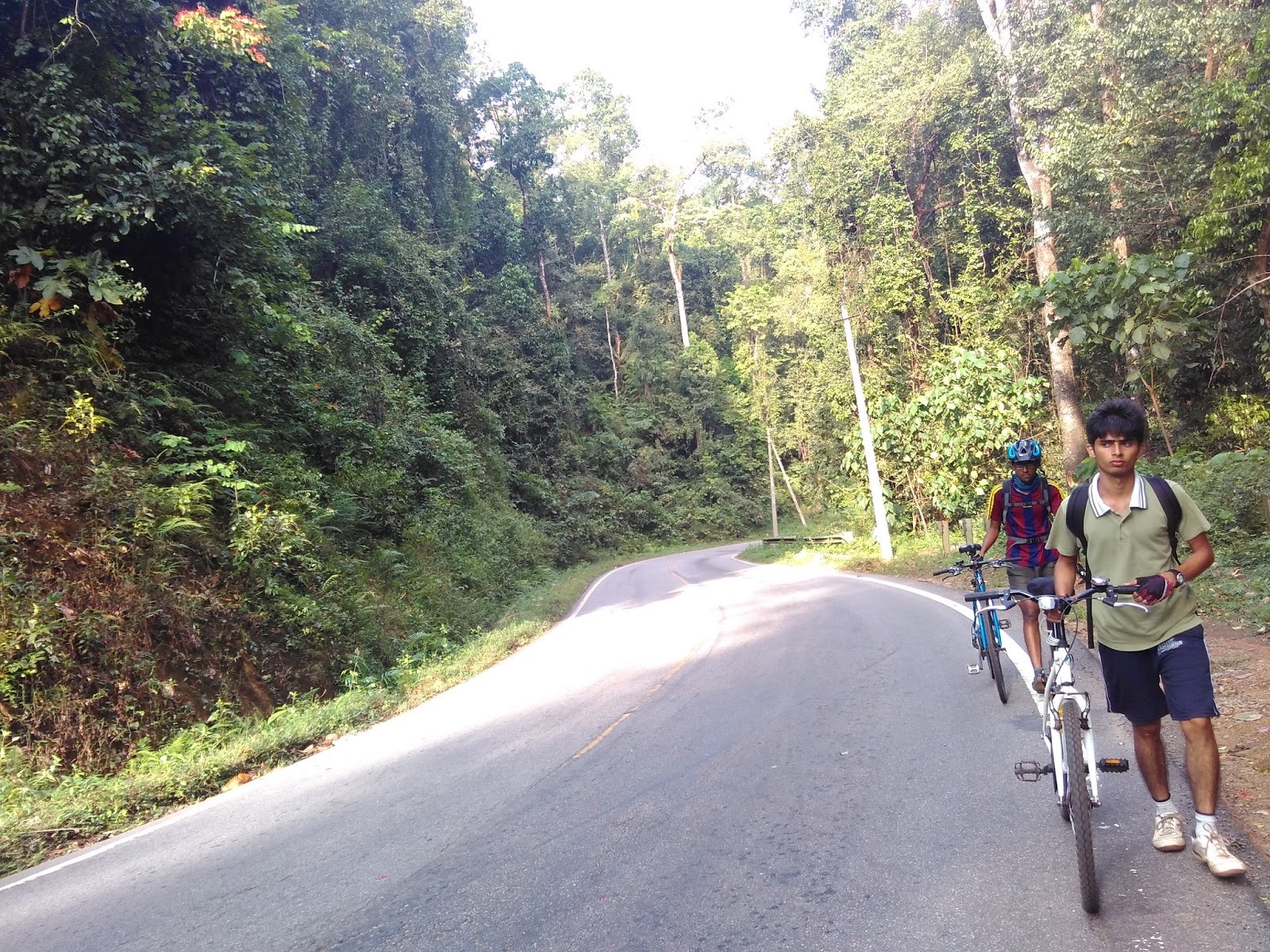
Reaching Madikeri was the toughest of all. Earlier we had taken four hours to descend from Madikeri and now to climb up we thought we needed a whole day. It was just 55km but the elevation was sickening. Most of the distance had to be covered on foot with the big hard sun draining all our energies. ‘Even the buses struggle in their first gear’ a local in a tea shop said. Every inch of the road made me count while climbing up. By afternoon we were in Madikeri and had decided to spend the evening there roaming the streets and chilling out. We spent the night in a lodge and just a last stretch remained.
 
The final stretch to my home is something which I wouldn’t forget. We had to deal with a tyre puncture, though it wasn’t a big disaster it was a part of adventure and we were well equipped. It just killed our time and slowed us down. After 5 days of continuous cycling for 14-16 hrs a day we had gained enough stamina and confidence. Hence we were determined to reach home for lunch. The last 15km is something which I wouldn’t ever forget. All I had was 200ml of water and 7 bucks in my pocket. I was alone from there. I know I could I have borrowed some but I don’t know why I didn’t.
 
Throughout the journey I had plenty of time to talk to myself. What else can you expect when you are cycling continuously for 15hrs? This made me heal some of the wounds of my soul , I had to think of many things like about my parents, friends, work , what I had been doing all these years and I remember asking my mother whether she had ever imagined if her son one day will be heading to the sea with only his bicycle!
There were a few situations where I had lost all the strength, laying by the road taking deep breaths. At a few more instances I was stunned by a shear miss of a hit by a car and a truck on another occasion. It took a few breaths to recover from the shock.
 

What I enjoyed the most was the down hill ride from Madikeri, food at Karavali and Dakshina Kannada, interviews with locals. The best out of all was thinking and thinking for hours while peddling. There are many people who had inspired me to this; the credit even goes to the some of the movies I have seen, books I have read. I had gained immense strength and I have no idea why I get a different appearance of the roads these days. The day after reaching home I laughed at my self looking into the mirror and saying no one can even guess looking at my face that I had an amazing adventure over the last week.


- Sangamesh

Thursday, 24 December 2015

My Cycling Expedition to Karavali. 670km, 3 friends, 5 days! : The Journey away from home!

The Narrator

The desire popped up when I had joined the college for my degree and had met few old friends who were so much into cycling. They were making plans for the vacation and we later decided to go to Hangarkatte village on the Arabian Sea coast. It was 360 km from Mysuru all the way up and down the Western Ghats. As it was monsoon, we couldn’t have made it right then. That’s what others said and we had to with hold the plan for a year and a half.


Soon after the semester exams Enosh and Sudharshan re initiated the same plan and I knew this was my vacation adventure. I still had to wait for was my last external exam. That didn’t stop us from meeting upon a cup of coffee to figure out the distances covered by us each day and where to stop over for the night. With a lot of heated debate the road map was finalized till the last minute. Enosh had a lot of maternal cousins in the coast, fixed up the stay for our nights. The very next day of my exam, even before the strike of the dawn we hit the roads with our bicycles in good condition and with all the necessary gears on backpack. We had already crossed Mysuru even before the sun rose and the unfriendly traffic on the Hunsur road built up.


That day we had to reach Madikeri by night fall covering a distance of 118km,  but unexpectedly had made it by 4 in the evening.  We were astonished by our own timing. Thanks for our early start! Some of the locals said Sullia is just down hill from here and we wanted to cover it rather than spend the evening at Madikeri. As we moved out of Madikeri town we had to face a steep elevation.  For a moment I remembered the faces of the people who made us believe it was coasting down hill all the way, but it was just worse as reaching the hill station of Madikeri. We had to pedal and pedal. And finally the long stretch of depression that the native had mentioned appeared in front of us. It was pleasing for all of us and in a couple of minutes we covered a huge distance effortlessly.  For a minute I could not resist the rush of the poetry by the American poet Henry Charles Beeching called “Going down hill on a bicycle”.

A Boy’s Song

With lifted feet, hands still,
I am poised, and down the hill
Dart, with heedful mind;
The air goes by in a wind.

Swifter and yet more swift,
Till the heart with a mighty lift
Makes the lungs laugh, the throat cry:—
“O bird, see; see, bird, I fly.

“Is this, is this your joy?
O bird, then I, though a boy,
For a golden moment share
Your feathery life in air!”

Say, heart, is there aught like this
In a world that is full of bliss?
‘Tis more than skating, bound
Steel-shod to the level ground.

Speed slackens now, I float
Awhile in my airy boat;
Till, when the wheels scarce crawl,
My feet to the treadles fall.

Alas, that the longest hill
Must end in a vale; but still,
Who climbs with toil, wheresoe’er,
Shall find wings waiting there.

As we where approaching the coast line, we could sense the change in humidity and hot currents bruised our chin even though the sun had lost its sheen. It was getting dark and we were still peddling. The headlights of the speeding cars started blinding us and making it risky to proceed.


We settled for the day at a local Hotel and we set upon exploring the local delicacies.  Dakshina Kannada is hub of verities of tasty food and locally made sodas; we relished on it until all our dehydration was fulfilled. 

The 2nd day began from sullia towards hangarkatte for which we had to pass through the crowds of Mangalore and Udupi. On the way we met a cyclist from sullia and he was amazed with our adventure. He spoke to us for a couple of minutes and suggested a mess for our breakfast which we found after descending two hills. As he mentioned it was a small hut in an obscure place called ‘Amchinadka’ on the state highway. . Soon after several rounds of the traditional neeru-dose our journey began. By afternoon we were in Mangalore. I was quite exhausted and craving for a power nap. After lunch we halted in a bus shelter and I slept peacefully for half an hour.


We still had to cover 75 km to reach hangarkatte. We knew our capabilities and there was no reason to hurry. The beautiful sunset on the river beds and on the road was wonderful to watch. The evening sun had set a crimson tint to the air. Being close to the sea level we were used to the hot air brushing past our tanned faces. By eight we were in the destination very much exhausted.

We were half way through our expedition. We came across so many people and some had had come up with various queries regarding our intent. Some interviews began with was this fete a desirous vow you had taken up some god or goddess? Very few where impressed and even inspired; those who had cycled earlier expressed their nostalgia.
Between Puttur and Udupi the road gets narrower at a few places even though it is a national Highway and handles enormous traffic connecting Mumbai. The historic cyclone at Chennai that played havoc among the local residents had actually made our journey less tiring. Every time the cyclone strikes in the coast of Bay of Bengal, the in-land farmers enjoy a cool temperature even though the rains are not too timely. We have seen the farmers of Rayal Seema, one the most arid regions in Southern India enjoying their bounty when ever the epicenter of the cyclone is off the mark of Andrapradesh. In fact we enjoyed and took advantage of the favorable climate. However we felt sad on knowing the severity of the cyclonic floods and the poor way the Govt of Tamil Nadu had handled the situation.


We spent 3 nights on the karavali cost wandering around and gaining weight for the return journey as a migrant winter visitor that comes to our shores from across the Himalayas. We interacted with the fishermen, heard their stories and enriched ourselves. They warned us very sternly not to swim in the delta as the waters were thoroughly unpredictable in this season. We strolled lazily for miles looking for the invertebrates thrown on to the shore by the waves. Crabs, urchins, mollusks and echinoderms of various sorts were strewn across the shore.  

- Sangamesh